The Flower Does Not Exist Outside the Heart is a series of generative digital paintings inspired by the philosophy of the Ming Dynasty Neo-Confucianist Wang Yangming (1472–1529), particularly his understanding of the relationship between human consciousness and the external world.
Wang famously suggested that the flowers on a distant mountain are not entirely separate from the mind that perceives them. Although separated by centuries and philosophical traditions, this idea finds an interesting parallel in twentieth-century phenomenology, particularly in Maurice Merleau-Ponty’s understanding of perception as an active relationship between the individual and the world, rather than the passive observation of an independent reality.
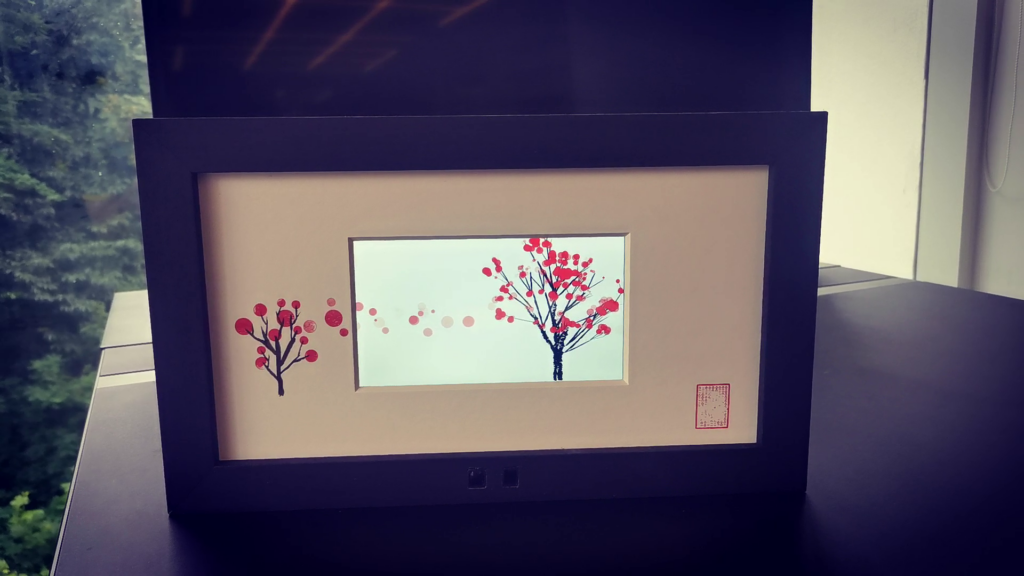
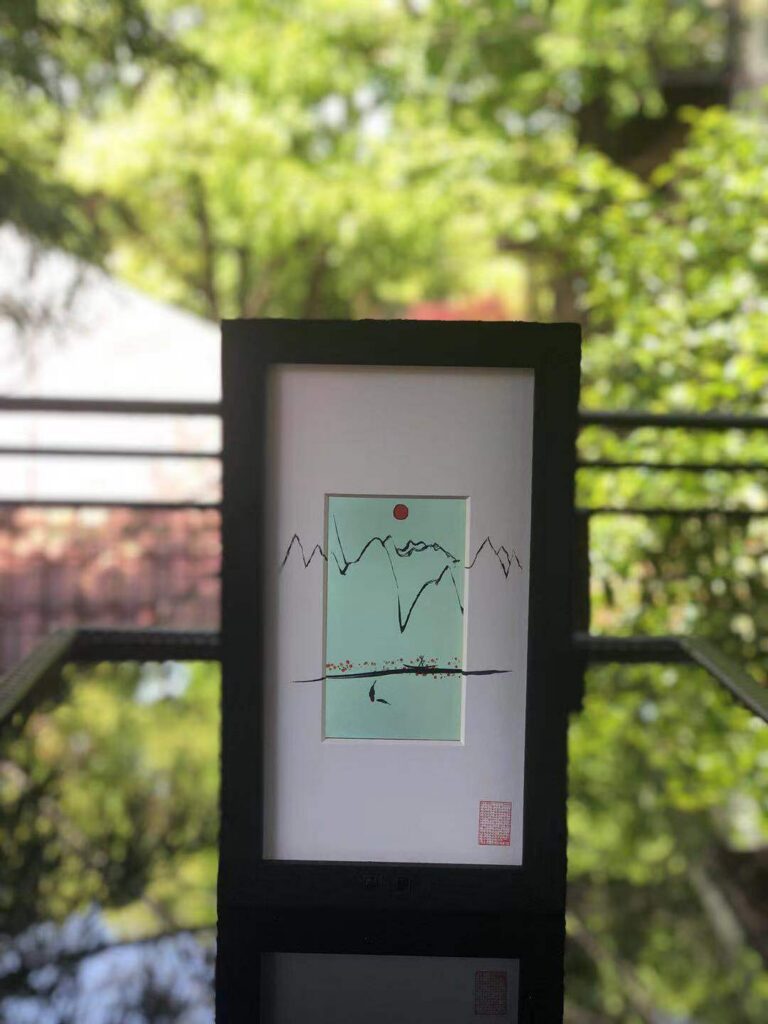
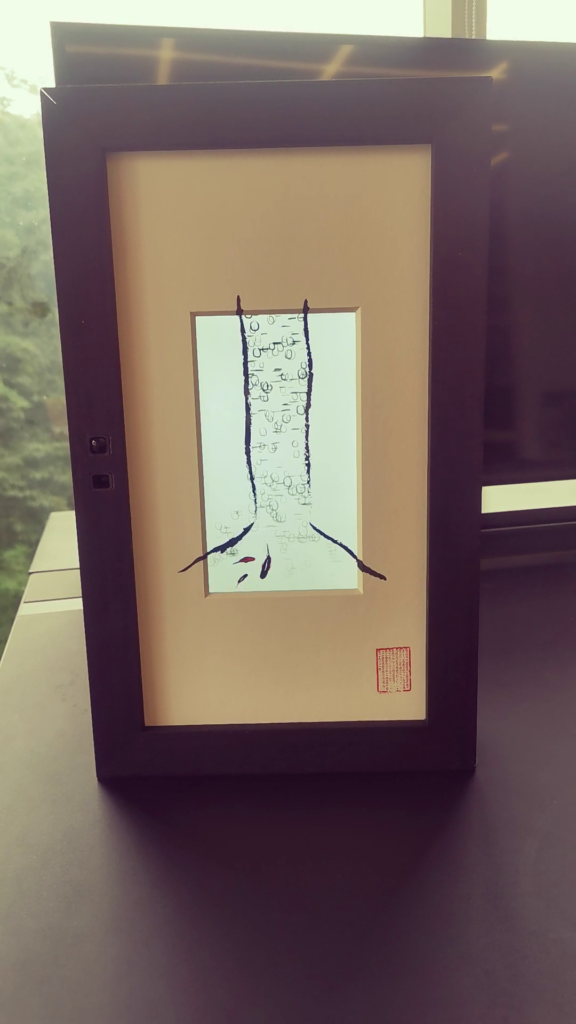
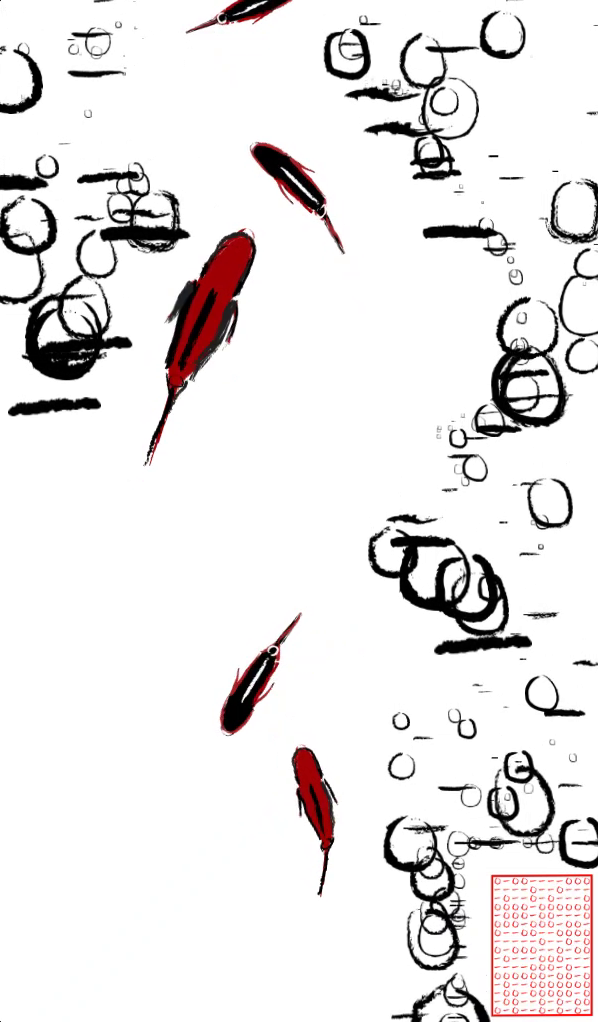
Using computer algorithms to simulate natural processes, the artworks produce delicate, evolving compositions reminiscent of traditional Chinese ink painting. In the absence of a viewer, however, the works remain dormant. Only when someone approaches does the process begin, allowing new forms to emerge and develop. Each encounter generates a unique and unrepeatable composition.
The series explores the relationship between perception and existence, suggesting that the viewer is not simply an observer of the artwork but an essential condition of its creation. Without the viewer, there is no flower.
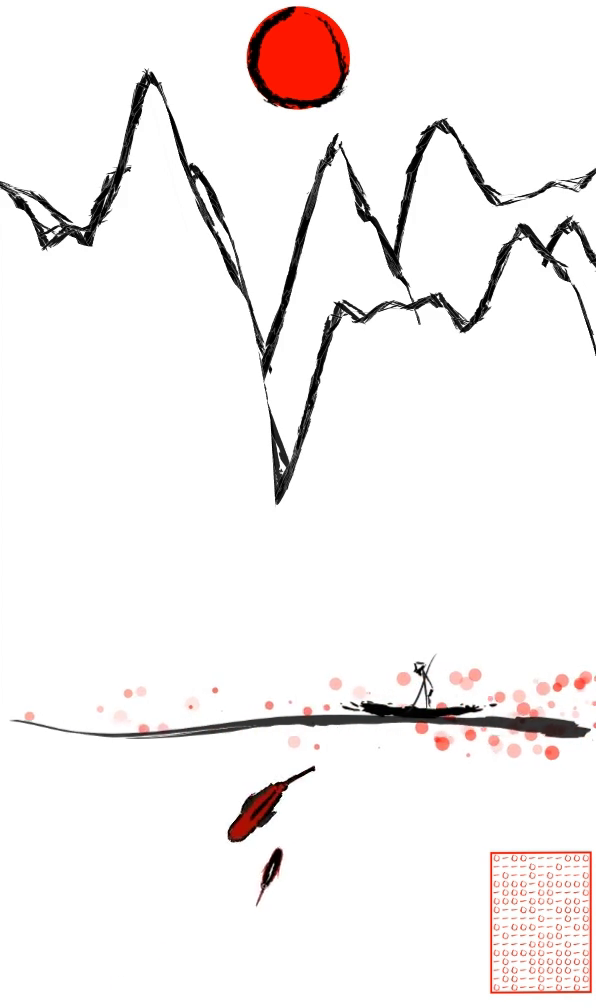
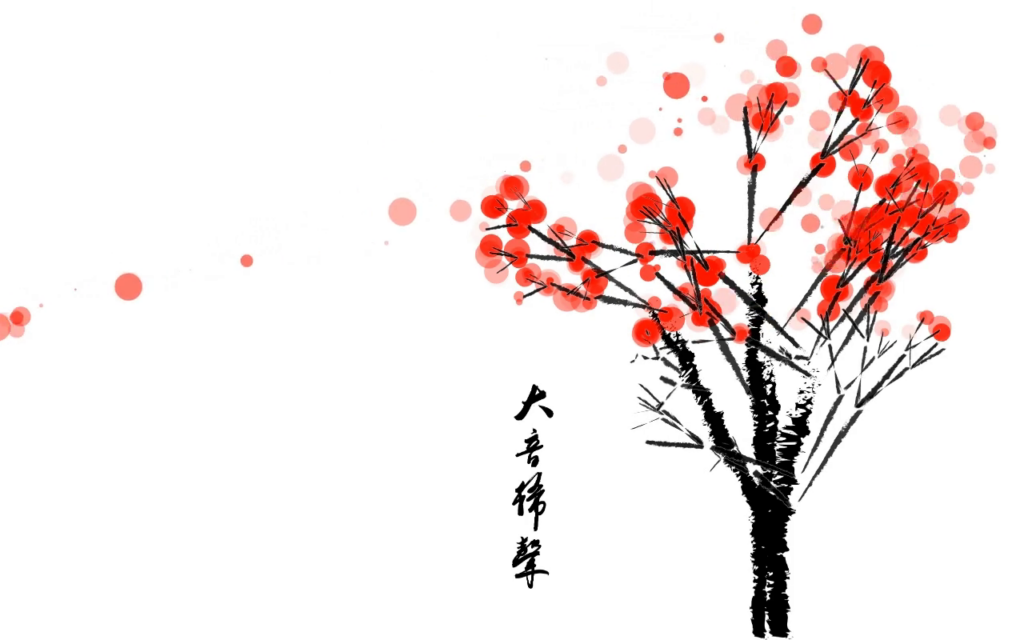
Exhibited at several galleries, here’s an introduction for when the series was used at the 邻里 exhibition at the Shanhui Art Museum in Xi’an Something in 2021:
Technical:
Each artwork combines traditional hand-painted elements with generative digital imagery. A small screen is integrated into a custom-made frame, surrounded by a painted canvas whose visual elements complement those generated digitally.
Concealed within the frame, a Raspberry Pi runs a custom Java-based application developed by Keohane. An infrared sensor detects the presence of a viewer, triggering the generation of a new and unique composition with each encounter.
The physical painting and digital imagery form a single artwork, with the computational elements remaining dormant until activated by the viewer’s presence.
Medium: Interactive mixed-media painting, hand-painted canvas, digital screen, Raspberry Pi, infrared proximity sensor and custom generative software.
Dimensions: 200 × 350 × 50 mm (each framed work).