Conditions For A Poem is an ongoing series of works exploring the relationship between machine learning, language, creativity and the human construction of meaning.
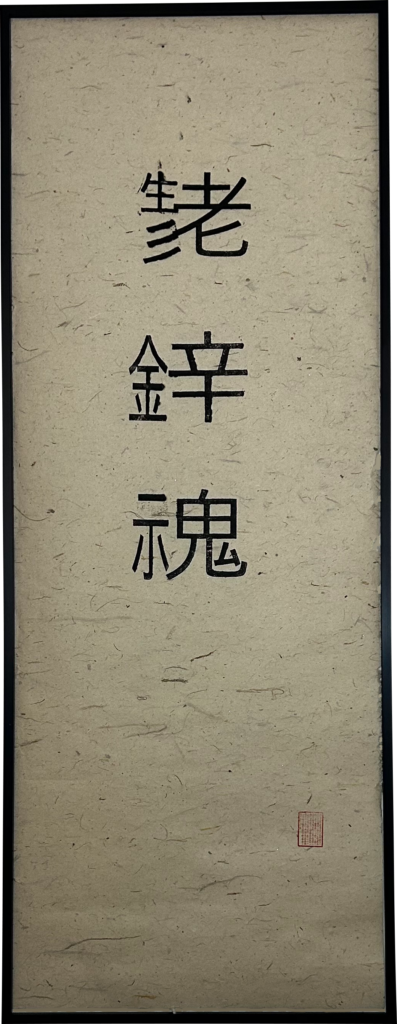
The project began with a speculative question: if creativity is sometimes understood as arising from processes beyond conscious intention, might something analogous be found within the hidden computational structures of machine-learning systems?
The suggestion of an artificial intelligence “unconscious” is not intended as a claim that machines possess consciousness, imagination or an inner psychological life. Instead, it provides a metaphor through which to investigate the complex networks of learned associations that influence their outputs, processes that are often difficult to observe or explain directly.
Rather than asking a machine to produce an artwork, Keohane developed a system through which some of these associations could be given an unfamiliar visual form, inviting human interpretation.
From Language to Form
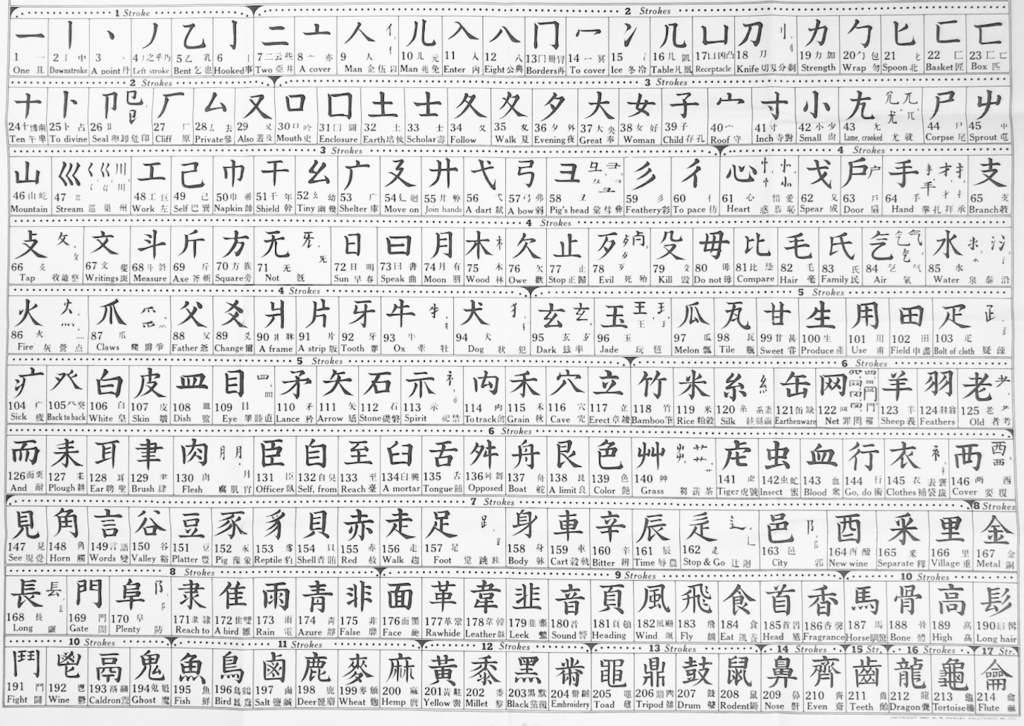
At the centre of the project is a computational system developed around the 214 Kangxi radicals, a traditional set of components used in the classification of Chinese characters.
Chinese writing has a long history of combining graphic elements to express meaning. One particularly interesting example is the principle of compound ideography, or 会意 (huìyì), in which elements carrying different associations are brought together to suggest a further meaning. The radical 日 (rì), meaning Sun, for example, combines with the radical 月(yuè) Moon to give us 明 (míng) “bright”.
Taking inspiration from this tradition, Keohane developed a custom application that uses machine-learning models to compare English words or sentences with descriptions associated with the Chinese radicals.
These models represent language as numerical vectors within a multidimensional semantic space. By calculating the relative proximity of these vectors, the application identifies radicals whose associated meanings are most closely related to the original input.
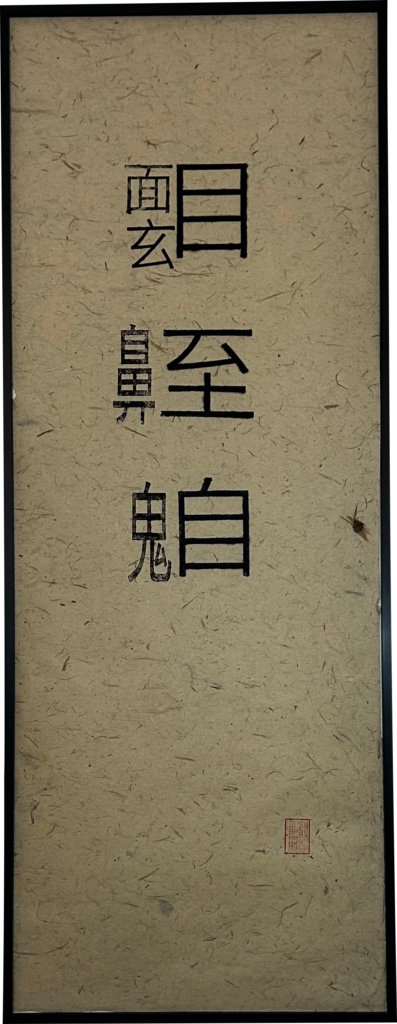
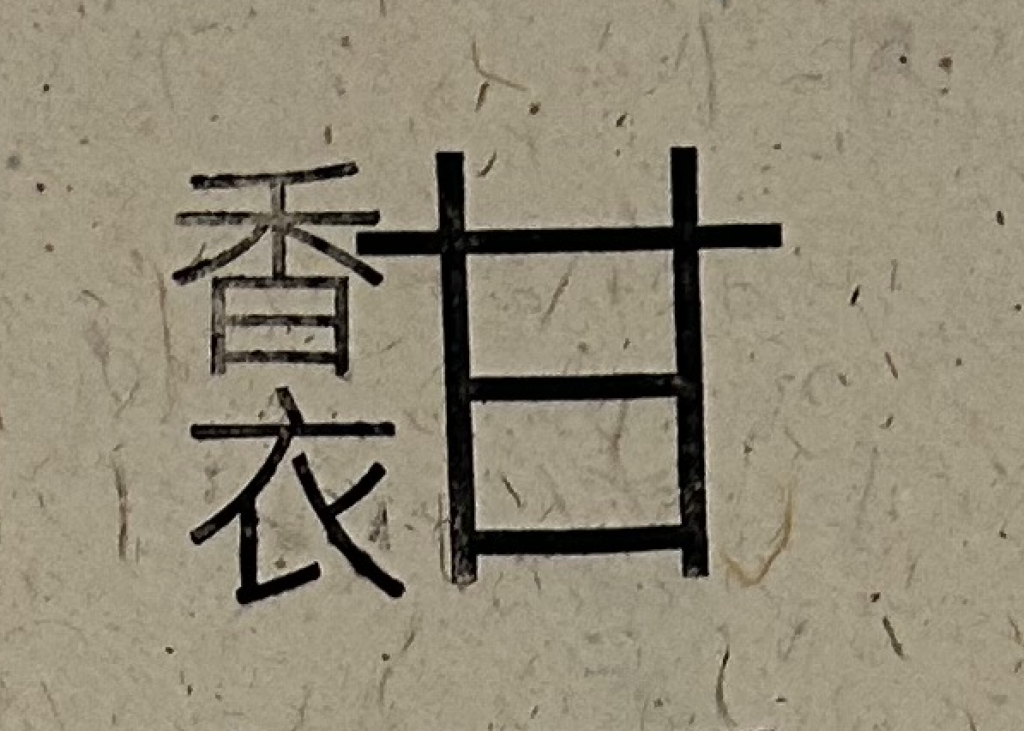
The selected radicals are then recombined into unfamiliar visual compositions resembling Chinese characters.
Importantly, these forms are not presented as new Chinese characters, nor as definitive translations of the original text. They are visual expressions of associations produced by a computational system operating within a deliberately restricted symbolic vocabulary.
The interest lies not in whether the machine has correctly interpreted a word, but in what its unexpected associations might provoke in the person encountering them.

Emergence, Tension and Residue
As the experiment developed, Keohane became increasingly interested not only in the associations selected by the machine, but in those that remained unresolved, competing or less immediately apparent.
Rather than producing a single composition, the system was subsequently developed to generate three related forms, each drawn from a different region of the model’s semantic field.
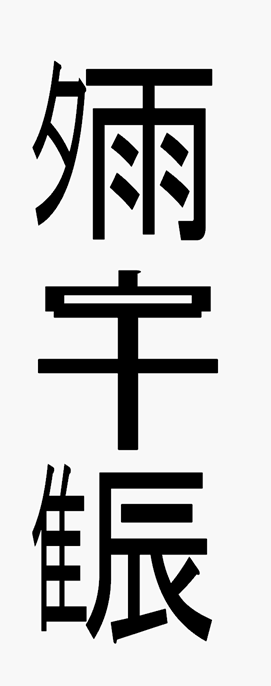
Emergence represents the strongest associations, those elements that rise most clearly towards the meaning of the original input.
Tension draws upon closely matched alternatives, where competing associations appear almost equally plausible and the system’s selection becomes less settled.
Residue introduces weaker but still relevant associations, elements that remain within the semantic field without dominating its interpretation.
Together, these three forms create a sequence of symbolic fragments. There is no prescribed grammatical relationship between them, nor any definitive meaning intended by the machine.
Yet when encountered together, the forms invite the viewer to establish relationships, imagine connections and discover possibilities that were never explicitly present in the computational process.
The resulting configurations began to resemble a form of compressed poetry. Their significance appeared to lie less in what the machine had produced than in what a human reader might discover between the fragments.
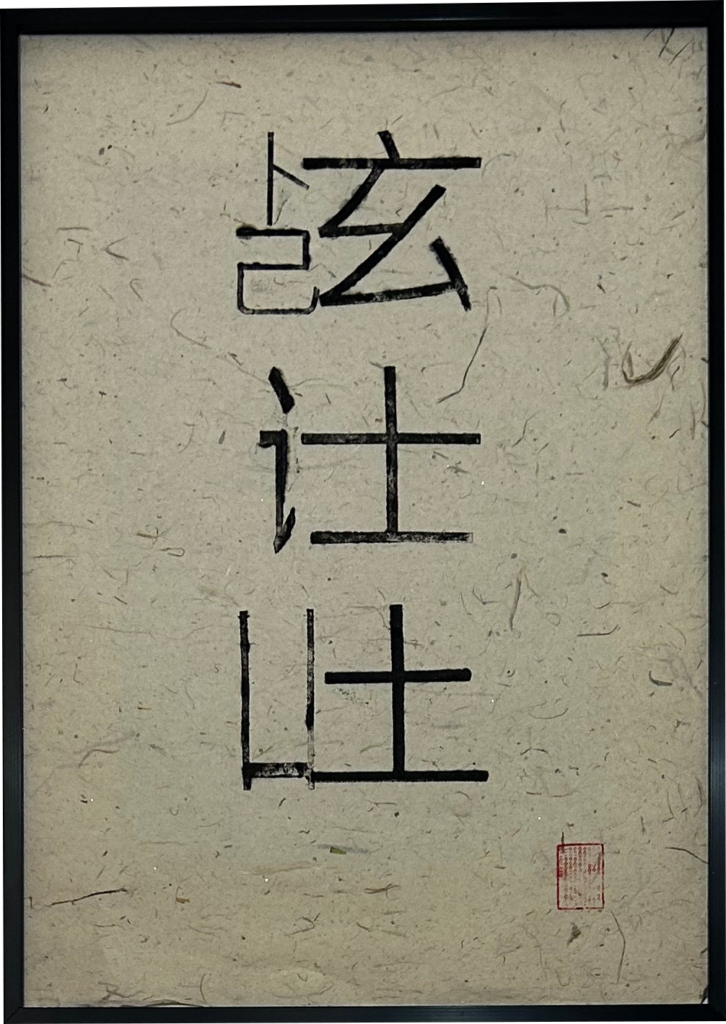
The machine was not writing a poem. It was producing the conditions under which a poem might be read.
From Computation to Print
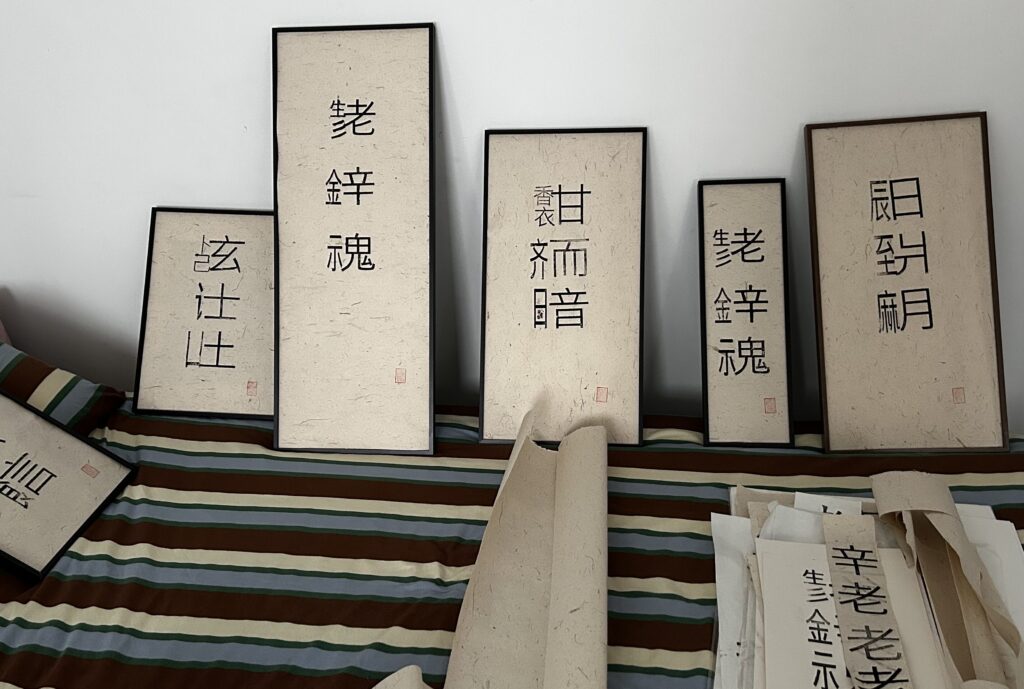
Although the compositions originate within a digital system, the final artworks are realised as handmade relief prints. The computationally generated forms are translated into physical printing blocks, allowing the selected components to be individually inked and impressed onto paper by hand.
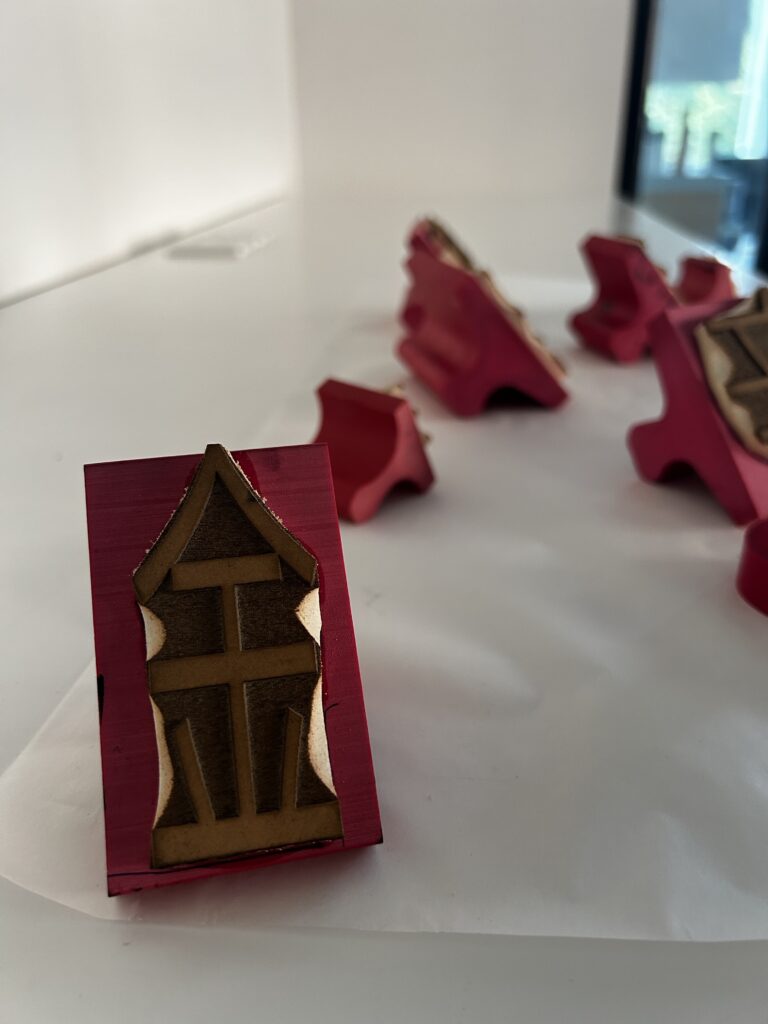
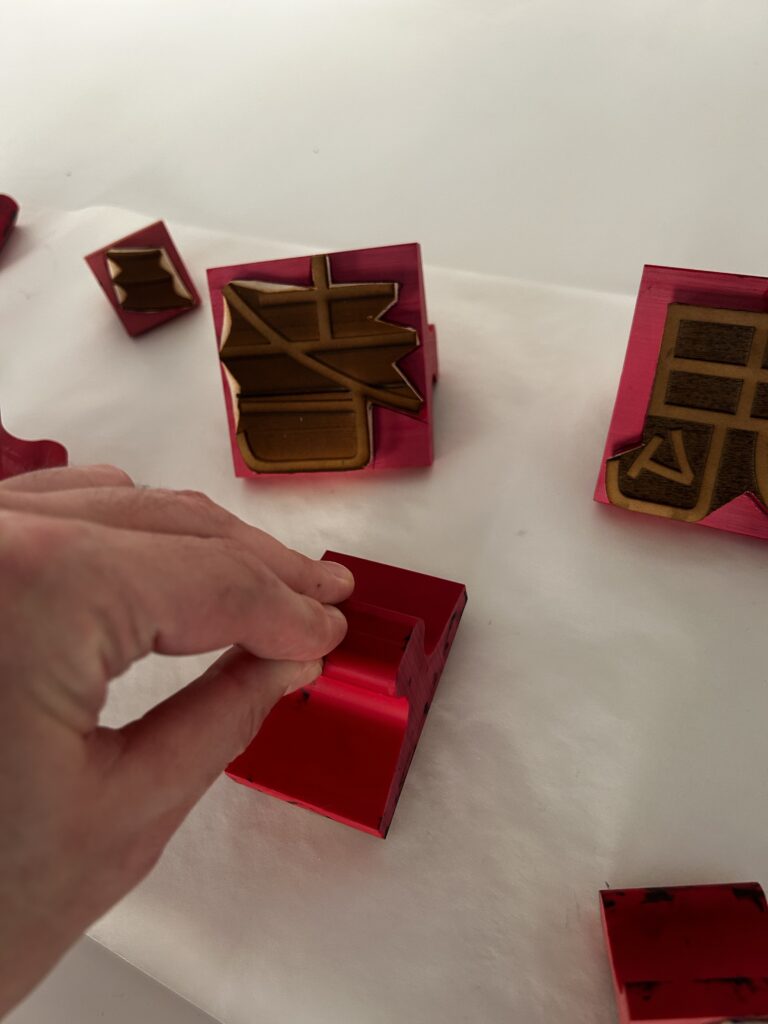
The prints are produced using black oil-based ink on textured, fibrous paper. The choice of ink was partly practical: the absorbent nature of the paper caused water-based inks to spread beyond the intended impressions, while oil-based ink allowed the forms to retain greater definition.
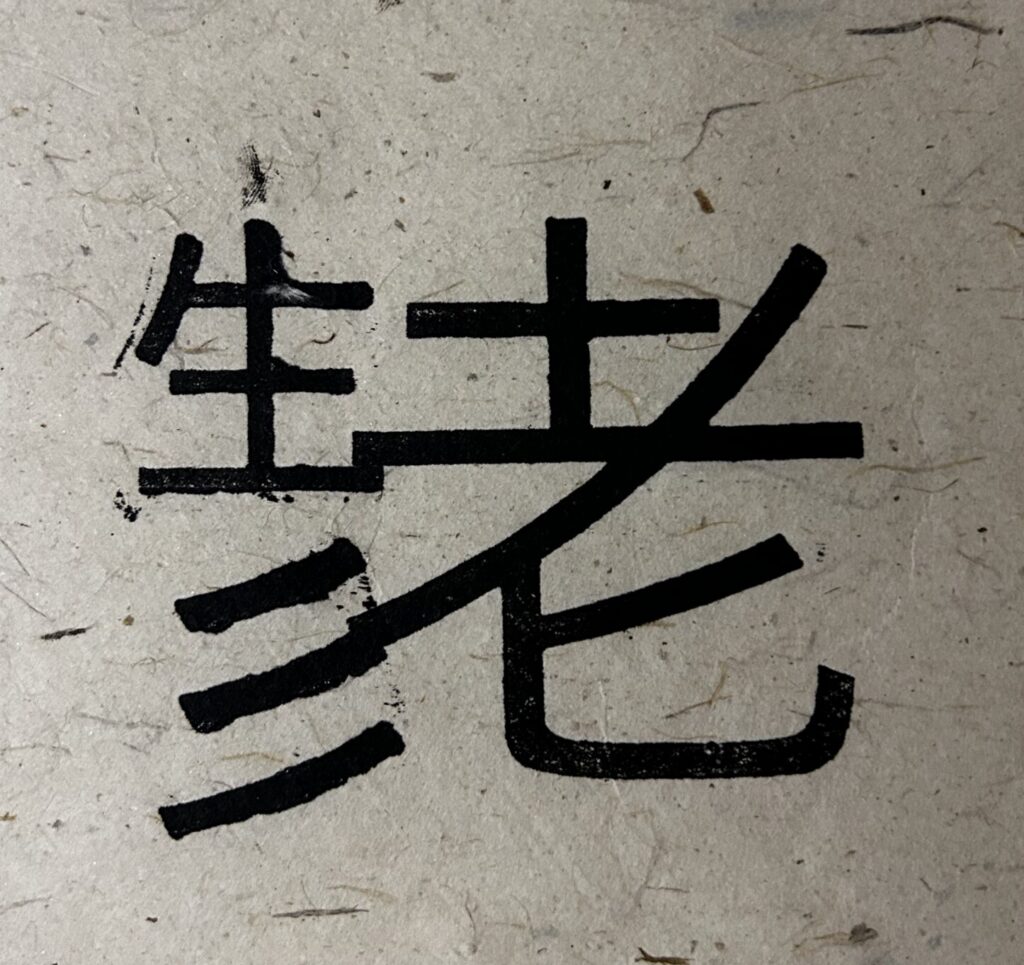
The physical printing process introduces another layer of transformation. Variations in pressure, ink distribution and the texture of the paper produce small differences between impressions. The clean mathematical forms of the digital compositions acquire a material presence that is neither entirely predictable nor mechanically uniform.
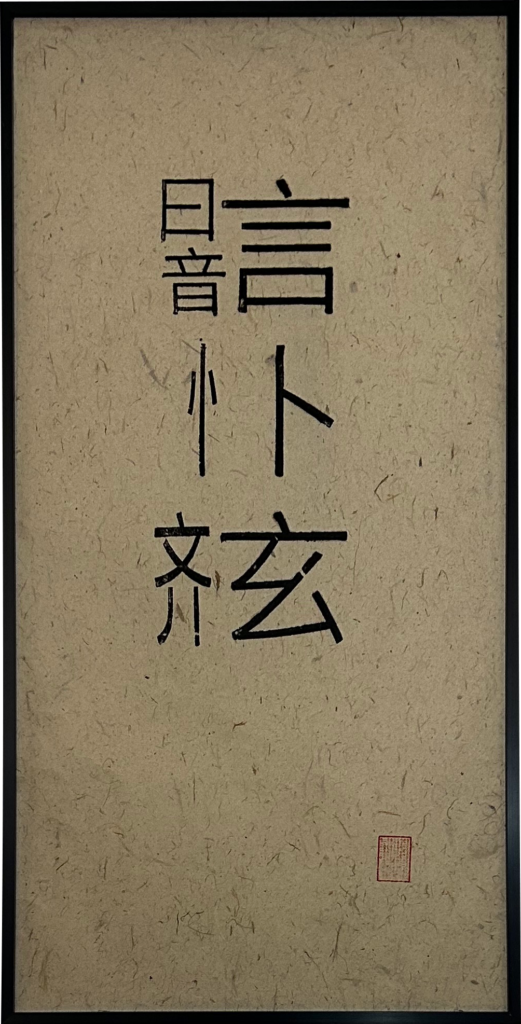
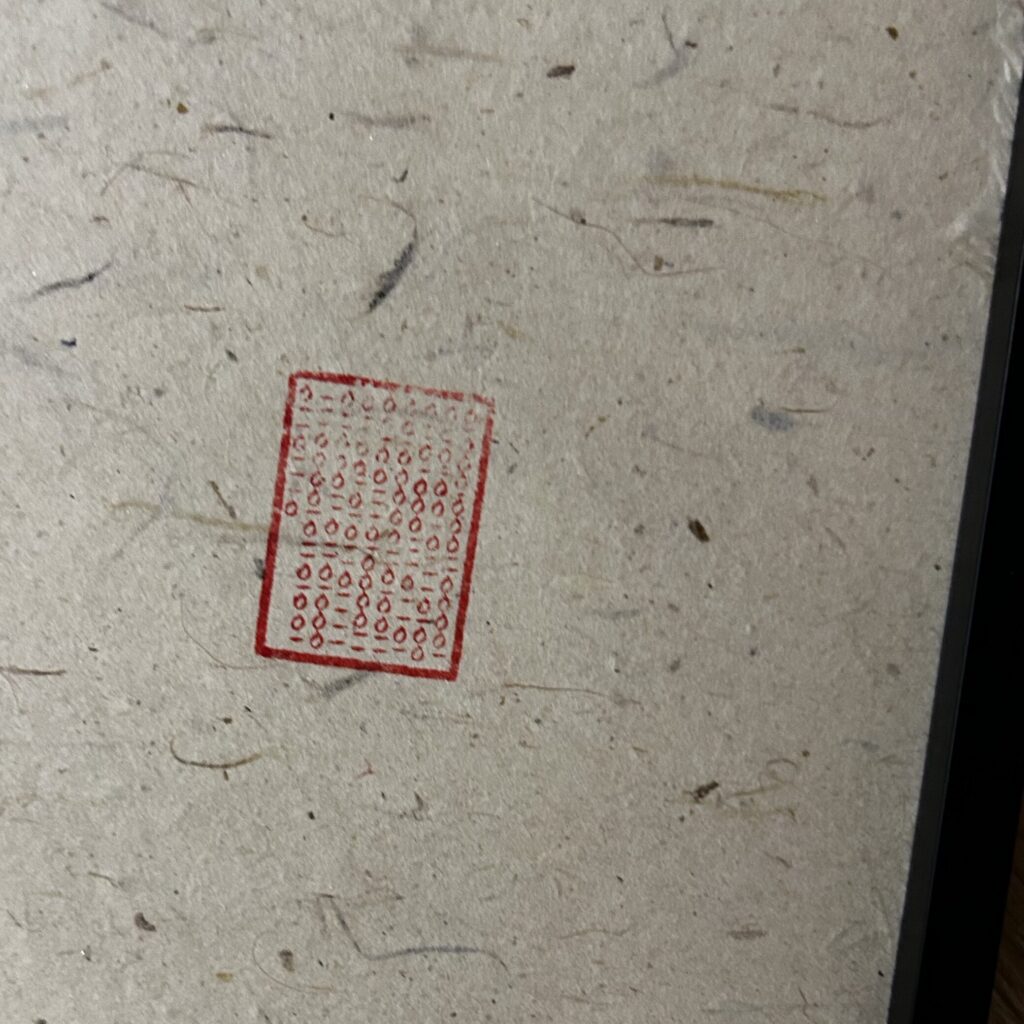
Each artwork presents three vertically arranged compositions, accompanied by Keohane’s personal red seal.
This transition from computational output to physical print is an important part of the work. A process that begins with statistical relationships between abstract numerical vectors concludes with the physical act of pressing ink into paper.
The resulting object carries traces of both processes, the computational selection of symbolic forms and their subsequent material realisation by the artist.
The machine does not write the poem. It creates the conditions through which a human being might discover one.
Technical:
Conditions for a Poem combines natural-language processing, semantic vector representations, generative visual composition and traditional relief printmaking.
The computational system was developed in Python using a selection of pretrained sentence-transformer models. A database of the 214 Kangxi radicals was assembled, containing their graphic forms and associated English descriptions. These descriptions were converted into numerical embeddings, allowing their semantic relationships to be compared with those of an input word or sentence.
Using cosine similarity, the application identifies and ranks the radicals most closely associated with the input. Additional calculations assess the distribution and relative closeness of these associations, informing the selection of radicals for the three output forms: Emergence, Tension and Residue.
The selected radicals are subsequently assembled into vector-based visual compositions through a custom SVG generation system.
For the completed physical artworks, the resulting designs are prepared as relief-printing blocks. The compositions are manually printed onto handmade mulberry bark and mountain hem fibrous paper using black oil-based ink, with the three forms arranged vertically and completed with the artist’s personal red seal.
Medium: Machine-learning-generated symbolic compositions, handmade relief printing, black oil-based ink on textured paper.
Computational methods: Sentence embeddings, cosine similarity, semantic ranking and custom vector composition.
Software: Python, Sentence Transformers, custom SVG generation software.
Printmaking: Custom relief-printing blocks, hand printing, oil-based ink, fibrous paper.